We sweep all types of chimneys:
- fireplaces
- woodstoves
- gas flues
- oil flues
Chimneys need to be swept in order to:
- remove the byproducts of combustion; i.e. soot and creosote.
- to remove other debris such as bird and animal nests
- to remove the debris which results from deterioration of the chimney from within the flue
We will always send a W.E.T.T. certified technician to your home.
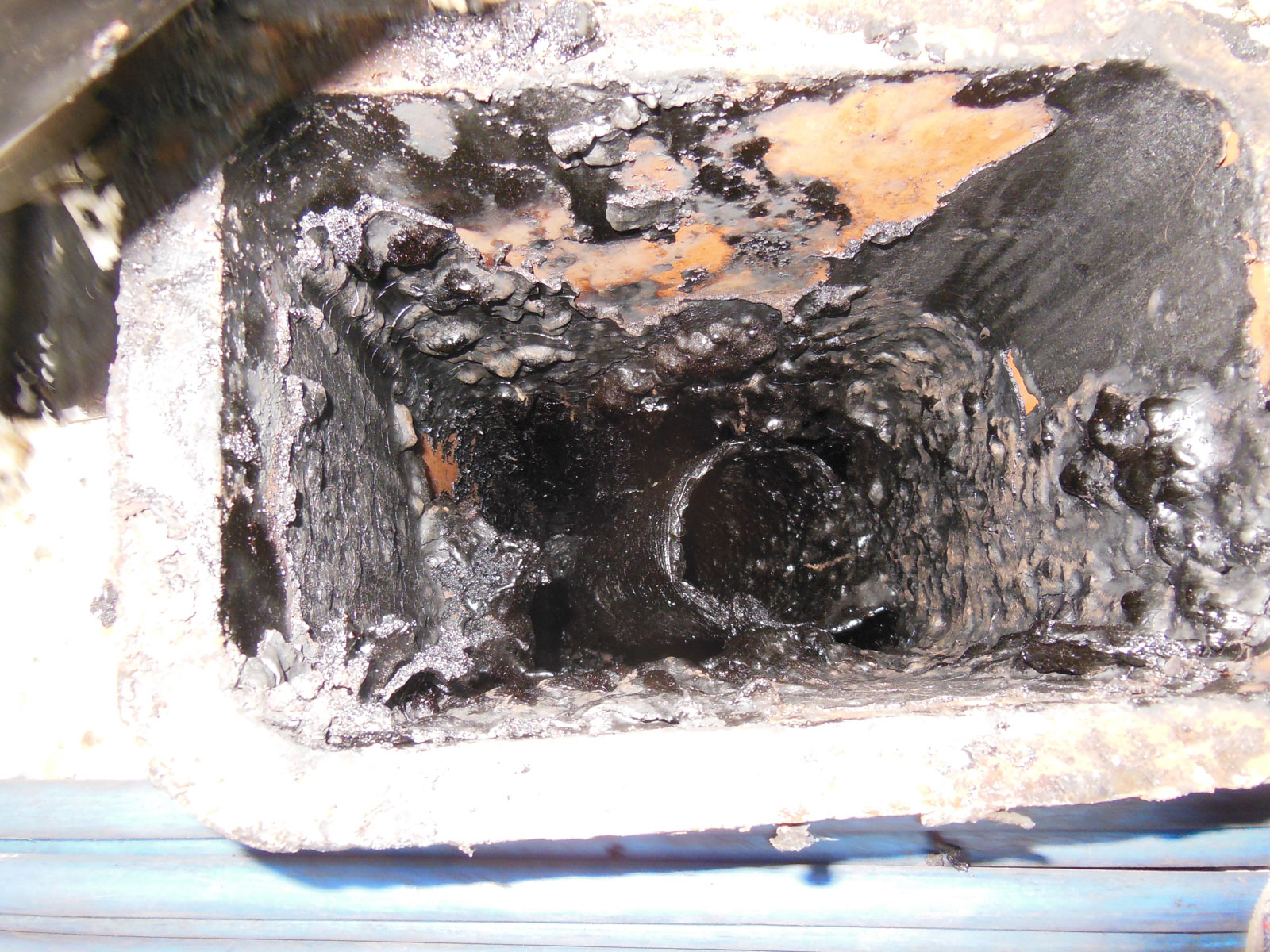
Why does my chimney need sweeping?
Remove the by-products of combustion, i.e. soot and creosote.
(Soot and creosote are by-products of burning wood and are formed out of the smoke going up the chimney. The cooler the smoke, the greater the build-up.
Remove debris from bird nesting, animal nesting and deterioration of the chimney falling inside the flue.
Cleaning chimneys since 1978, your wood burning system is in good hands when it is serviced by a technician from The Chimney Swift. You get both our knowledge and vast experience. Remember, a well maintained wood burning appliance is not only more energy efficient but also extends the life of your system.
Tips to ensure you experience the warm ambiance and heat you are expecting from your fire.
- Burn only seasoned wood. Wet wood makes cool, smoky fires. If the smoke does not burn in the firebox, it may condense in the chimney, forming creosote
- Make sure that each load of wood flames brightly until it is reduced to a bed of coals.
- Go outside and check your chimney. If there is smoke other than on start-up, perhaps you’re burning your fire too cool.
- Never let a fire smoulder.
- In mild weather, split your wood smaller and build smaller fires using several small pieces.
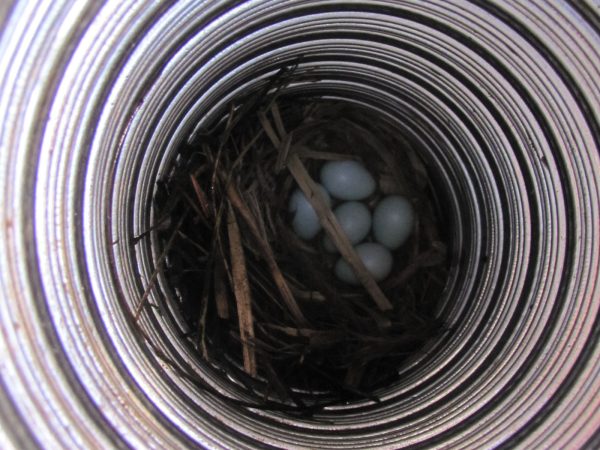
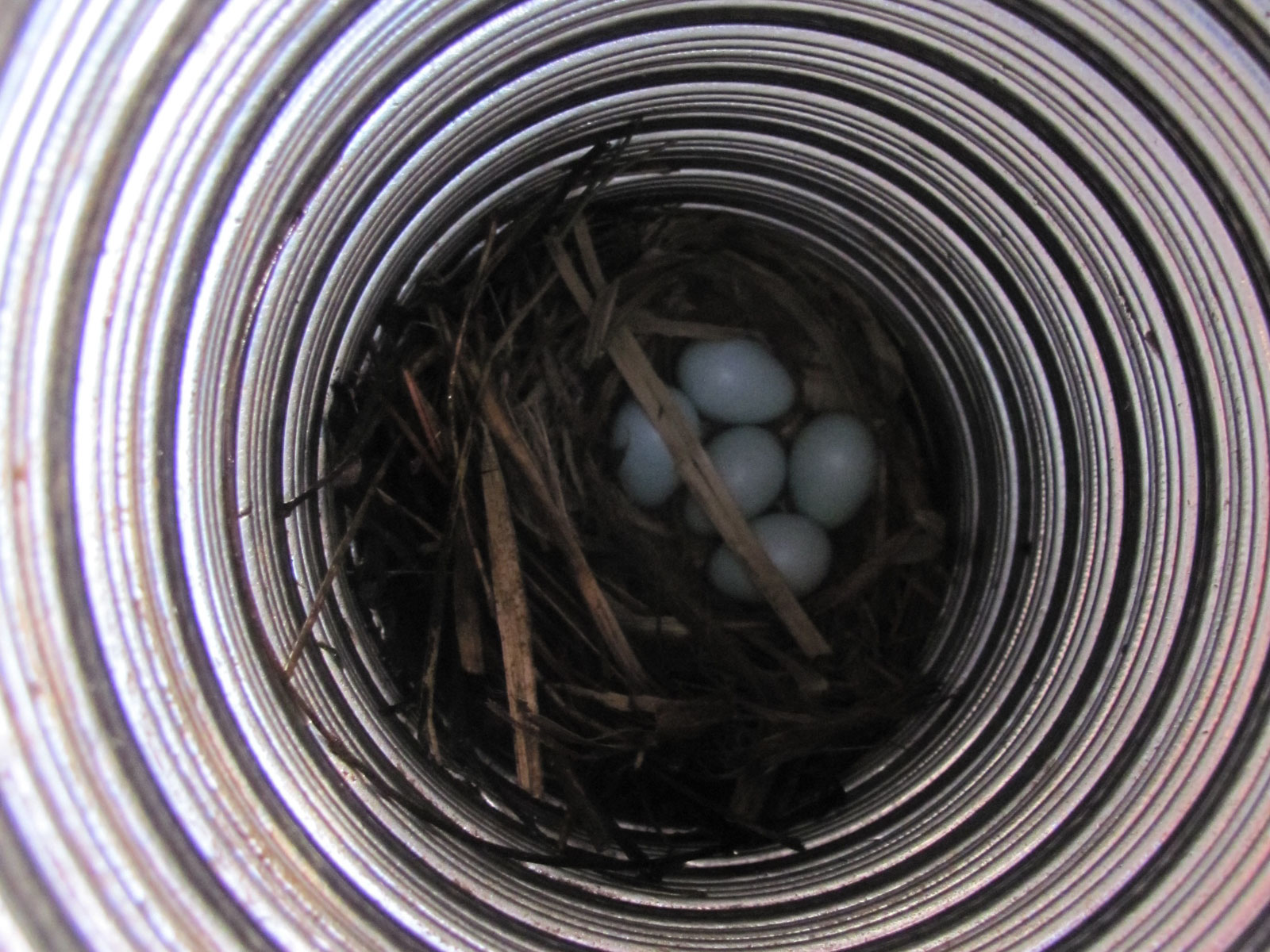
Starling nest with eggs in chimney flue
Canadian wood-heat consultant John Gulland offers this:
Firewood should be split and stacked under cover for 6 to 12 months to be ready for burning. A piece of dry firewood has large cracks or checks in the end grain. Look for these when judging the quality of firewood. Hardwood and softwoods are chemically similar – the difference is density. Hardwoods, being more dense, produce a longer-lasting fire.
As fire burns, it goes through three phases:
- Water
Up to half the weight of freshly cut logs is water. After proper seasoning, only 20% of the weight is water. As the wood is heated in the firebox, this water boils off, consuming heat energy in the process. The wetter the wood, the more heat energy is consumed. That is why wet wood hisses and sizzles while dry wood ignites and burns easily. - Smoke or flame
As the wood heats up above the boiling point of water, it starts to smoke. The hydrocarbon gases and tars that make up the smoke are combustible if temperature is high enough and oxygen is present. When the smoke burns, it makes the bright flames that are characteristic of wood combustion. If the smoke does not burn in the firebox, it may condense in the chimney, forming creosote. - Charcoal
As the fire progresses and most of hydrocarbons have vapourized, charcoal remains. Charcoal is almost 100% carbon and burns with very little flame or smoke. Charcoal is a good fuel that burns easily and cleanly when enough oxygen is present.
Don’t burn household garbage.
Unlike seasoned firewood, household garbage contains a wide range of materials and chemicals. Burning garbage doesn’t destroy those chemicals, it just changes their form, causing unpredictable and harmful chemical reactions. The bottom line: Burning garbage hurts the environment, your health and your wood-burning system. www.burnitsmart.org
Chimney Liners
The Ontario Building Code states in section 9.21.3.1 that ” Every masonry or concrete chimney shall have a lining of clay, concrete, firebrick, or metal.”
A proper liner for each flue in a chimney is important.
- in order to provide a gas and water-tight conduit
- to completely contain the by-products of combustion
- to safely exhaust those by-products from your home.
We specialize in re-lining chimneys which service appliances that use gas,oil and wood.
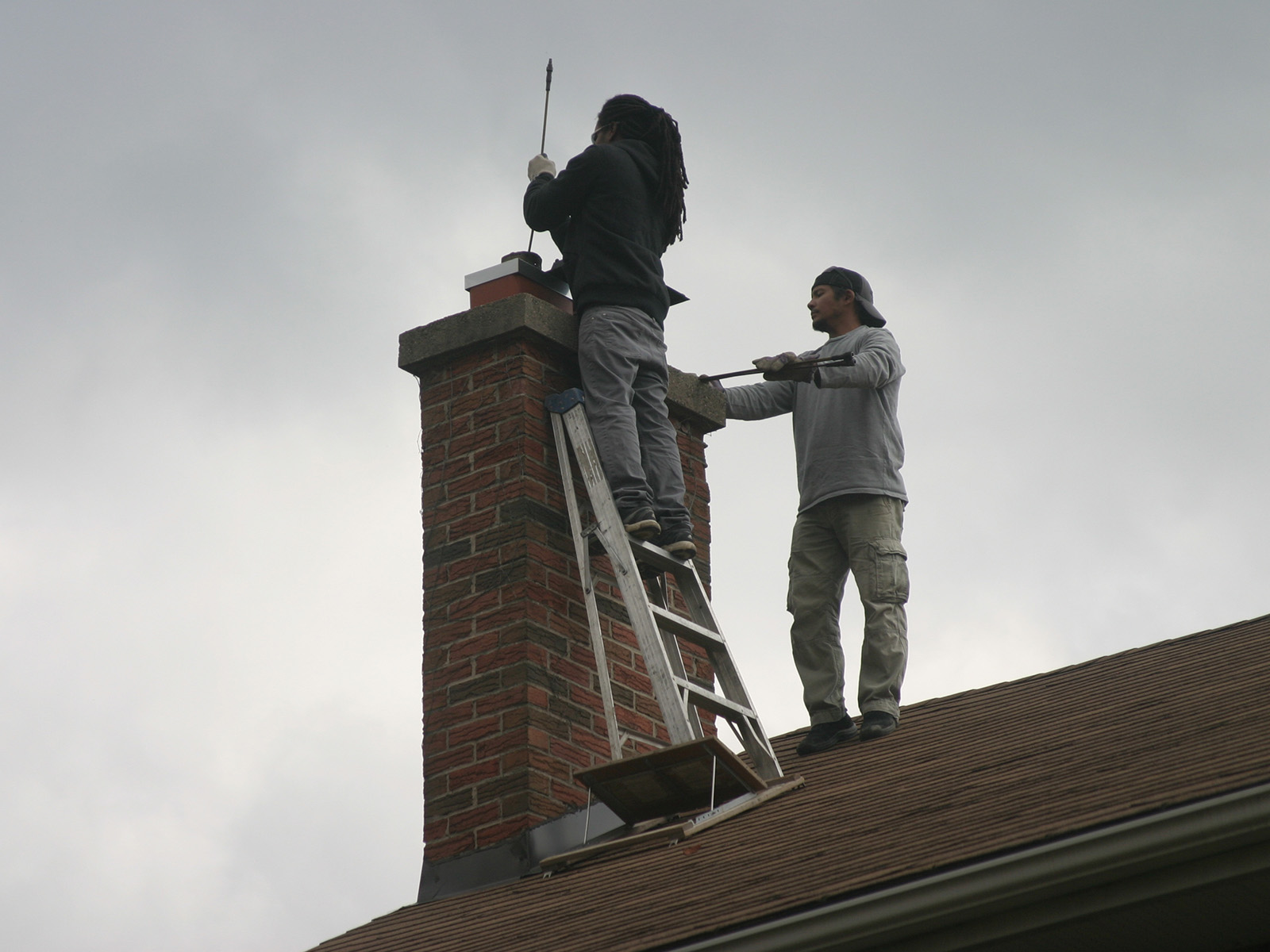
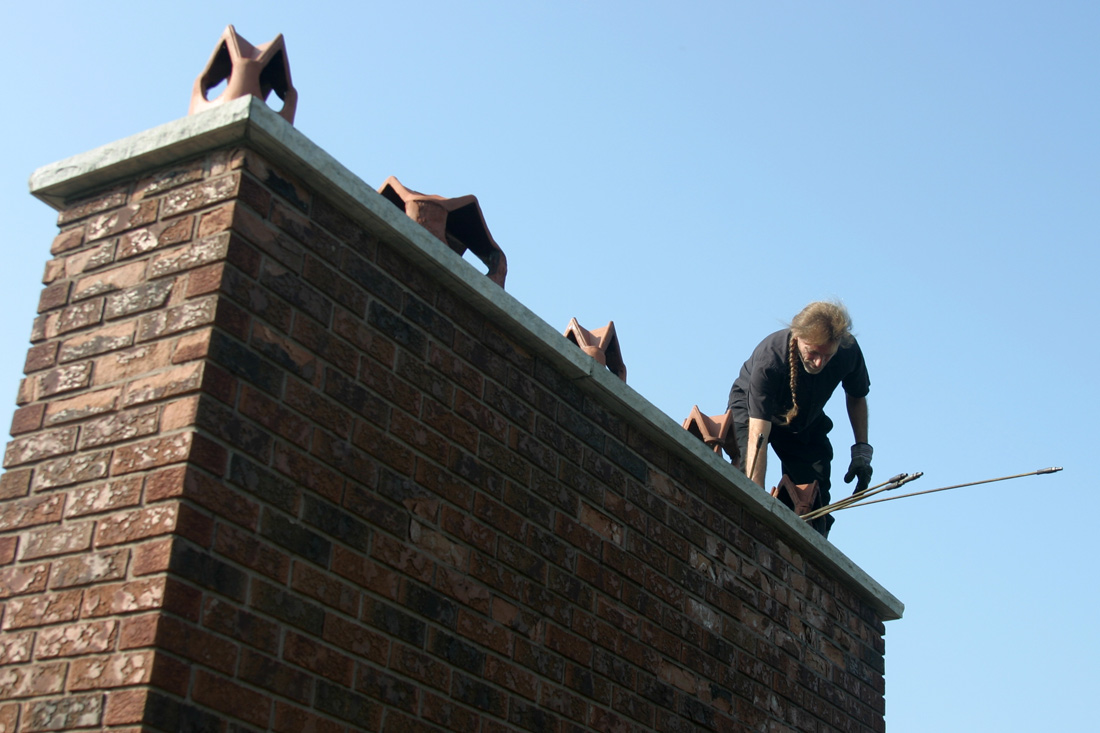
We also specialize in difficult installations, such as really tall chimneys (see photo’s above).
Gas and oil-fired appliances, especially newer ones, are extremely efficient. This means more heat for you in your home, but much less heat going up the chimney. Less heat in the flue means a substantial amount of condensation buildup, especially in the portion of the chimney which extends above the roof. This part of the chimney is not sheltered by the house and is therefore much colder. There is now water running down the inside of your flue.
If the flue is unlined, or has a (non watertight) clay tile liner, this water will now get into the brickwork itself. Freeze / thaw cycles throughout the winter will now cause the chimney to rapidly deteriorate.
Any appliance, whether gas, oil or wood, will perform best with the proper size flue.
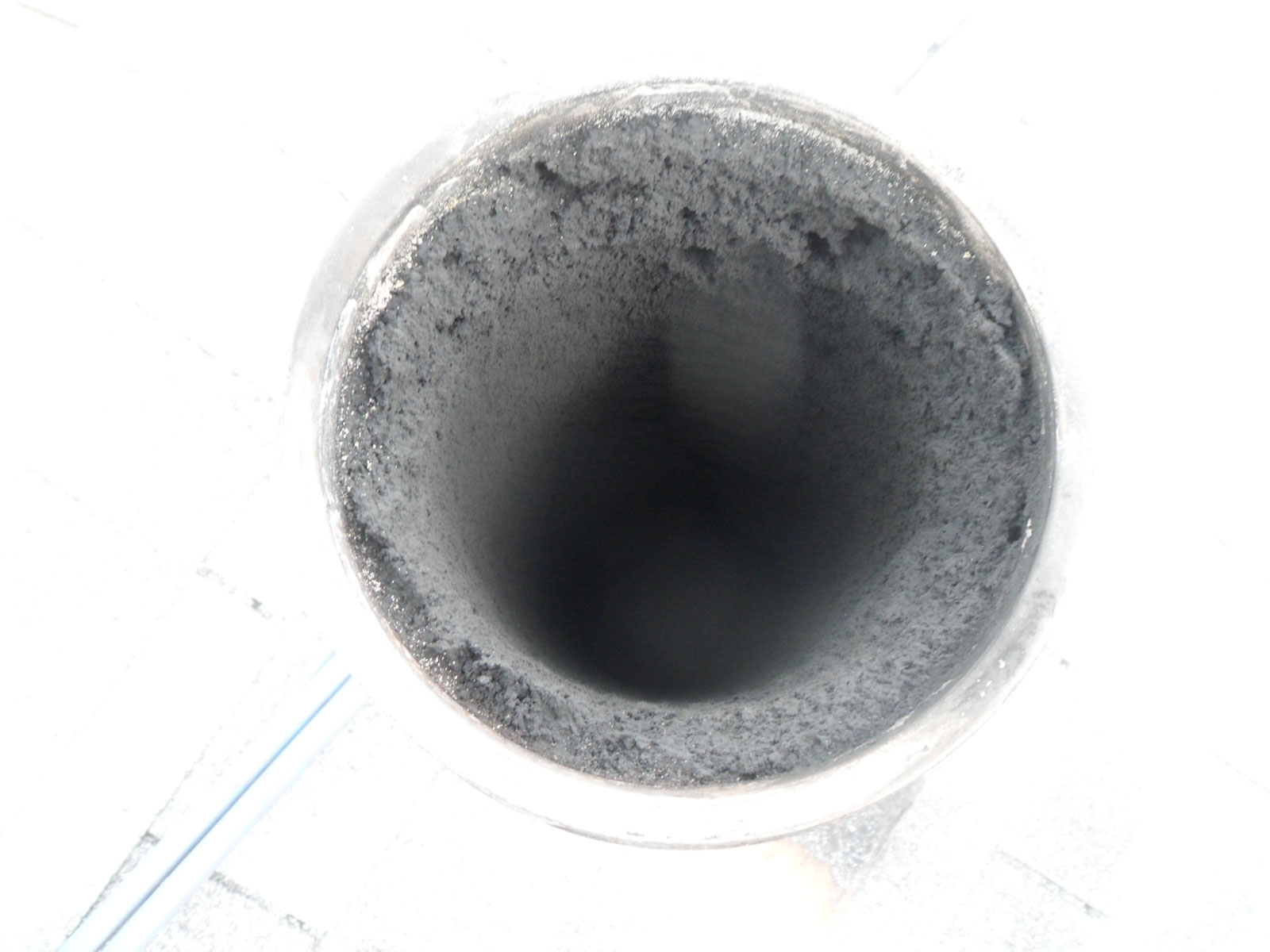
An undersized flue will have severe flow restriction and will spill flue gases and smoke into the home.
An oversized flue will be very cold, have poor draft and this will lead to excessive condensation being present in the flue. Stainless steel is an excellent material to use to re-line a flue to the proper size for the appliance.
Stainless steel is also an excellent material for the lining or re-lining of flues servicing wood-burning appliances.
Stainless steel is much better able to withstand the stress of thermal cycling and thermal shock which occurs frequently when burning wood. Going from a cold system to a really hot fire rapidly, such as when burning a lot of paper, puts a lot of stress on the flue lining material. Clay flue tile cracks quite easily – examples of which are shown below. For most applications we use the type 316TI stainless steel liner manufactured by Chim-flex.
Go to our photo gallery of chimney problems to see more examples of what can happen without a proper flue lining.
Chimney Creosote Problems photo gallery
Oil Heating
- New oil furnaces are as efficient as gas furnaces.
- Higher efficiency means more heat in your home and less heat going up the chimney.
- This can lead to excessive condensation (moisture) in the chimney.
- A stainless steel liner is a must to ensure that the flue is the correct size to properly vent the furnace.
- A tee is now required at the base of all stainless steel liner installations. Since the requirement to have a tee was only mandated with the 2000 version of B-139 (the Oil Installation Code), some older liner installations may not have the tee.
There are reasons why a tee might not have been installed:
- not physically possible due to space availability.
(Manufacturers have tried to address this issue by re-designing their tees to allow for easier installation.) - installer not aware of necessity.
Typically, homeowners are being given 90 days to comply before oil delivery is halted.
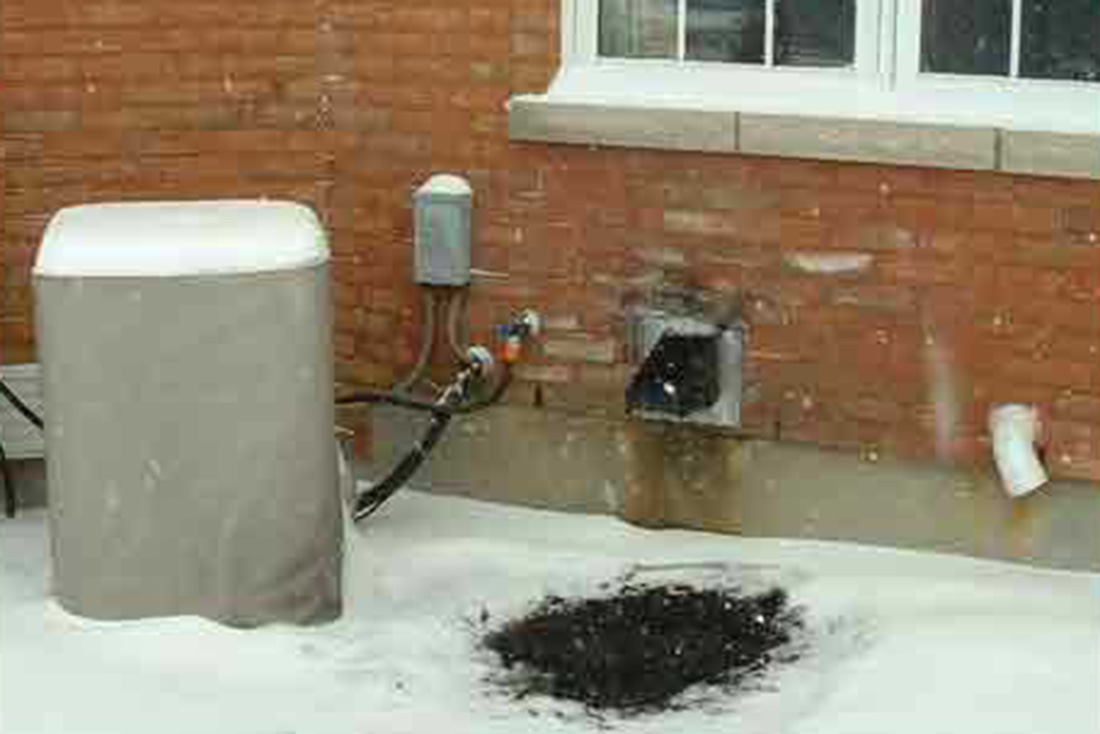
Direct-vent oil appliances
The photo above shows the outside termination of a direct-vented oil furnace. It is a good example of the type of problems associated with this type of venting:
The termination is right under a window. Under certain wind conditions, toxic fumes can be drawn back into the house (probably the most common complaint with this type of vent).
The unsightly black circle in the snow is oil soot. It is not uncommon for this type of oil vent to perform poorly, leading to excessive soot buildup. It will certainly kill any plant material in this area.
Oil soot is very corrosive. It does not show up well in this photo, but the brick immediately above the vent is deteriorating. The vent termination is also corroding.
Call today for more information or a quote on chimney cleaning!